
Bethany Beyond the Jordan: The Baptism Site of Jesus — A Complete Guide
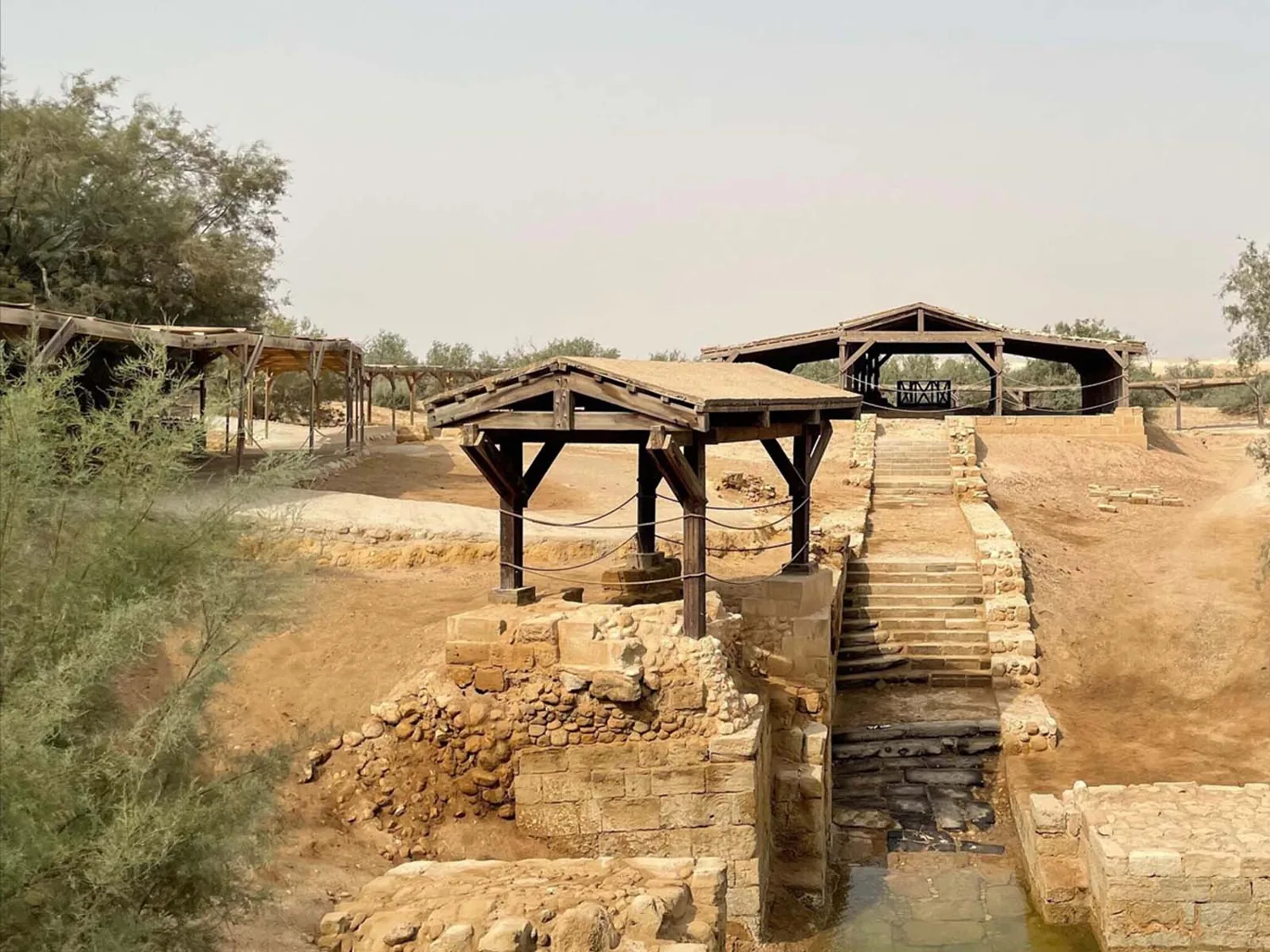
Jordan · Al-Maghtas · UNESCO World Heritage
On the east bank of the Jordan River, a short drive from Amman, sits one of the most significant places in Christianity: Bethany Beyond the Jordan, known in Arabic as Al-Maghtas — the place accepted by most Christian denominations as the baptism site of Jesus, where he was baptized by John the Baptist (Prophet Yahya in Islam). It is a UNESCO World Heritage Site, a working pilgrimage destination, and — because the river here is a live international border — one of the most quietly charged landscapes in all of Jordan travel.
This is a full guide to visiting: the history and the faith, how a visit actually works, the tickets and timing, the story of the shrinking Jordan River, and the border you can see with your own eyes. We filmed the whole journey — you can watch it below.
Watch the journey
The Baptism Site of Jesus — our Jordan film
A travel documentary and historical narration from the banks of the Jordan River: the baptism site, the border with the West Bank, the vanishing river, and the story of John the Baptist.
Full episode from the Tales of Time Jordan Series, filmed on location at Al-Maghtas.
Quick facts
Bethany Beyond the Jordan at a glance
Fees and hours can change and the Jordan Pass may include entry — confirm the current details before you travel.
Orientation
Where is Bethany Beyond the Jordan?
Bethany Beyond the Jordan lies on the eastern (Jordanian) bank of the Jordan River, in the Jordan Valley north of the Dead Sea. From Amman it is roughly a 45-minute drive down to the valley; from the Dead Sea resorts it is only 15–20 minutes. You leave your car at the visitor car park — you cannot drive into the site itself.
Bethany Beyond the Jordan (Al-Maghtas, in Jordan) is not the same as Bethany near Jerusalem, the village of Mary, Martha and Lazarus. The Gospel of John places John the Baptist’s work “in Bethany beyond the Jordan” — this eastern-bank site — which is exactly why the name matters.
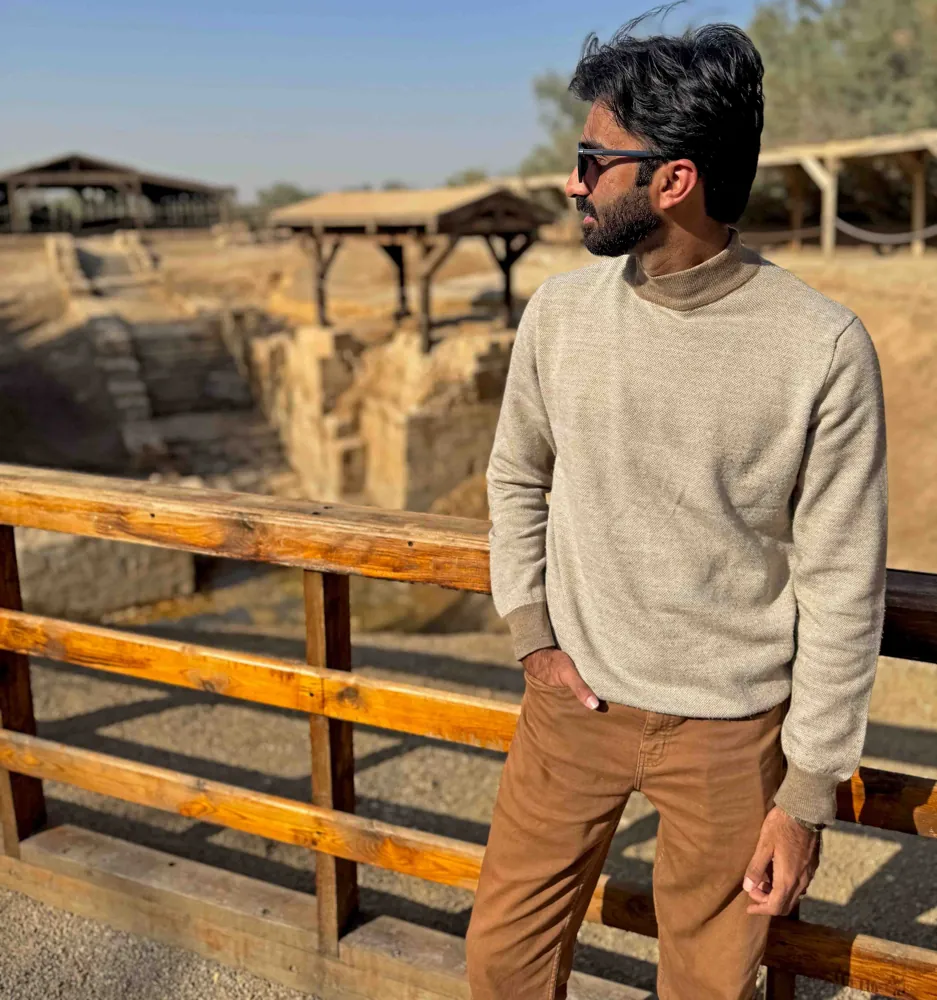
Looking out over the archaeological site toward the Jordan River.
The faith & the evidence
Is this really where Jesus was baptized?
Short answer: it is the site accepted by the majority of Christian denominations as where Jesus was baptized by John the Baptist, and in 2015 UNESCO inscribed it as a World Heritage Site after decades of archaeology, scholarship and church recognition.
The ground supports the claim. Excavations here have uncovered Roman and Byzantine churches, chapels, and baptismal pools, along with the water channels that connected them to the river — a landscape shaped by centuries of pilgrimage. In the Jubilee Year 2000, Pope John Paul II prayed here, the first pope to visit; later popes followed. It is honest to say the exact spot is debated — the river has shifted its course over two thousand years — but the weight of tradition, text and archaeology all point to this stretch of the eastern bank.
How a visit works
The visitor centre, the mosaic map and the shuttle
A visit is organised, not open-wander. You buy your ticket at the entrance, then travel into the site by shuttle with an assigned guide, stopping at the churches, the baptismal pools and the riverside. Plan for around 90 minutes, and remember that filming is not allowed at the entrance because this is a sensitive, controlled border zone — cameras come out once you’re inside.
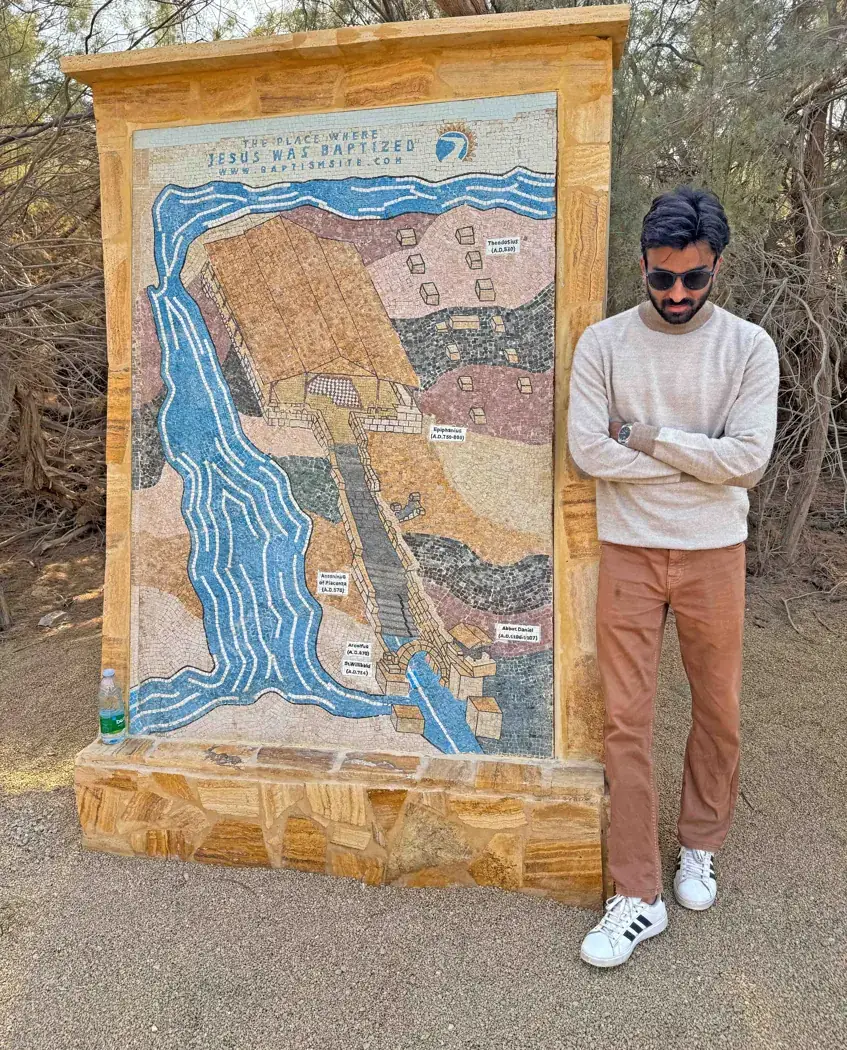
The mosaic map at the site lays out the Jordan Valley, the river and the churches you’ll walk between.
What you’ll see inside
- The Church of St John the Baptist and the remains of Byzantine churches with mosaic floors
- The baptismal pools and the original baptism spot, now set back from the river’s shifted course
- The Jordan River waterfront, where pilgrims gather at the water’s edge (your time here is limited)
- Nearby Elijah’s Hill (Tell al-Kharrar), linked to the prophet Elijah
The river is the border
Palestine across the water: the Jordan River border
Stand at the waterfront and the most striking fact is geographic, not religious: the Jordan River here is the international border. The far bank is the West Bank, with Jericho close by. Look across and you can see the Israeli flag flying on the opposite side, a few metres of shrunken river away.
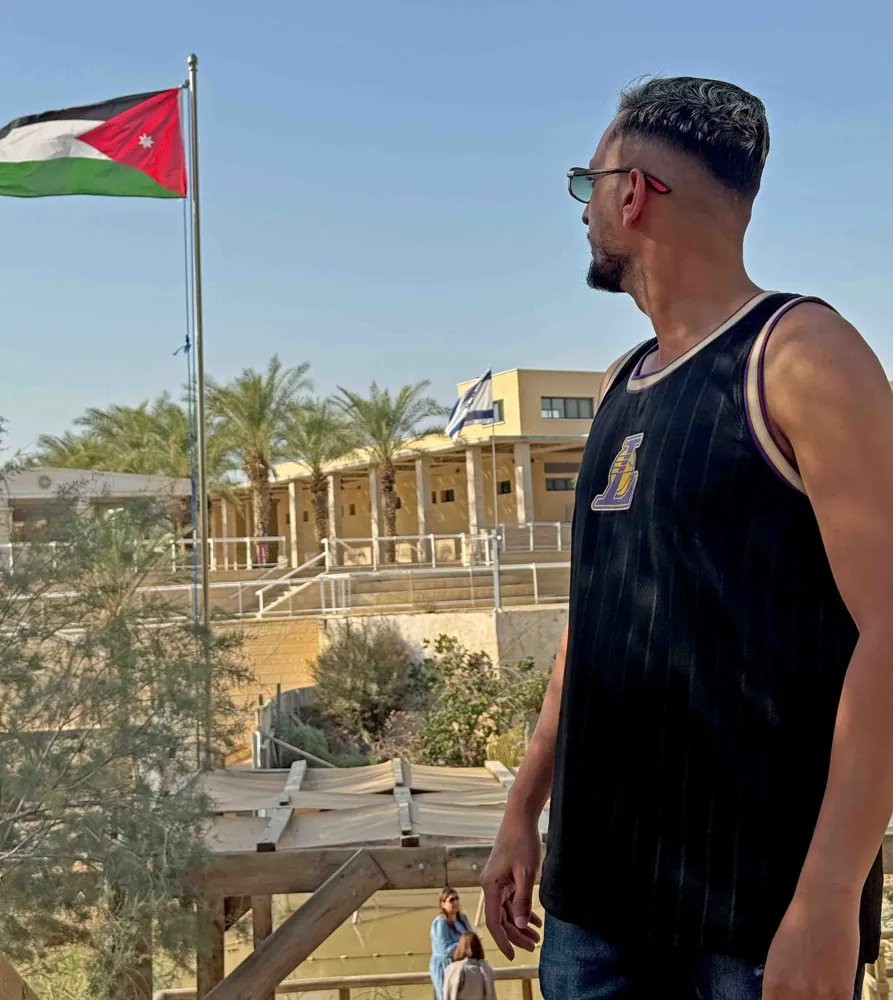
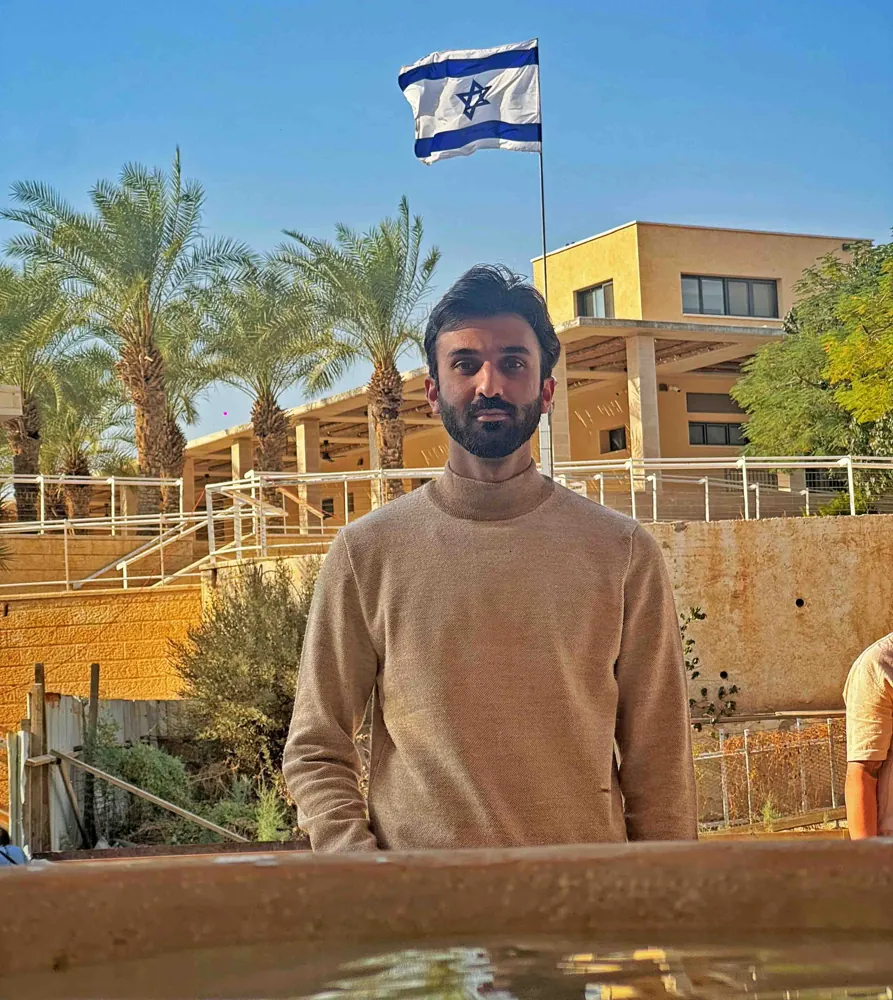
Left: the Jordanian bank where visitors stand. Right: the opposite bank — the West Bank — just across the river.
The two banks have been governed by the 1994 Jordan–Israel peace treaty, which fixed this stretch of the river as the boundary. For many travellers it is an abstract line on a map; standing here it is a fence, a flag and a current. As a Pakistani passport holder, this waterfront is also where the journey physically stops — the crossing is not open to every nationality, and the river marks the edge of how far you can go.
An environmental story
What happened to the Jordan River?
Most visitors expect a mighty river and find a narrow, sluggish channel. The Jordan River today is a fraction of its historic self, and the reason is a century of human demand on its water.
The river’s water starts north at Lake Tiberias (the Sea of Galilee). Over decades, large volumes have been diverted for agriculture and drinking water by the countries that share the basin, so far less reaches the lower river than once did. What does flow south is further reduced and, in places, polluted by farm run-off and wastewater before the river finally trickles into the Dead Sea — itself shrinking for related reasons. The thin ribbon of water at the baptism site is, in its own way, a monument to that change.
Religious history
Who was John the Baptist? (Prophet Yahya)
For Christians he is John the Baptist; for Muslims he is Prophet Yahya — revered in both faiths, and central to why this site exists.
John came from a priestly family and preached a baptism of repentance at the Jordan, drawing crowds to the water. The Gospels describe him baptizing Jesus here, with the heavens opening and the Spirit descending like a dove — the moment many mark as the beginning of Jesus’s public ministry. John and Jesus were relatives (traditionally cousins). John was later imprisoned and executed, and his memory is honoured across the region, including in churches named for him.
A common mix-up: the figure who later travelled to Ephesus (in modern Turkey), traditionally alongside Mary, was St John the Apostle — not John the Baptist. The famous basilica at Ephesus is dedicated to John the Apostle. Two different Johns, often confused.
Two sites, one river
Al-Maghtas vs Qasr al-Yahud: Jordan or Israel?
Planning a trip, people often ask whether the baptism site is in Jordan or Israel. The honest answer: there are two facing sites on opposite banks of the same narrow river.
On the eastern side is Al-Maghtas (Bethany Beyond the Jordan) in Jordan — the UNESCO-inscribed site, home to the baptismal pools and the Church of St John the Baptist. On the western side, in the West Bank, is Qasr al-Yahud, reached from the Israeli side. They sit only metres apart, which is why you can see the opposite bank and its flag so clearly. If the question is which side holds the recognised archaeology and World Heritage status, it is the Jordanian side.
A short history
The history of Al-Maghtas, in brief
The story of Bethany Beyond the Jordan runs from the Gospels to a modern minefield, and back again to a World Heritage Site.
- Biblical era. John the Baptist preaches and baptizes at the Jordan; the Gospels place the baptism of Jesus on this stretch of the river.
- Roman & Byzantine. Churches, chapels and baptismal pools are built and the site becomes a major Christian pilgrimage destination.
- Centuries of decline. Shifting river courses, earthquakes and changing control gradually leave the site abandoned and largely forgotten.
- After 1994. The Jordan–Israel peace treaty calms the border, the area is cleared of landmines, and serious excavation begins on the eastern bank.
- 2015. UNESCO inscribes Bethany Beyond the Jordan (Al-Maghtas) as a World Heritage Site.
Plan your visit
How to visit Bethany Beyond the Jordan from Amman
- Getting there. About 45 minutes by road from Amman via the Dead Sea Highway. There is no direct public transport to the gate, so come by car, private taxi or an organised tour.
- Tickets. 10 JD for foreign visitors and 2 JD for Jordanian residents; the shuttle and guide are part of the visit. The Jordan Pass may cover entry — check before you buy.
- When to go. Spring (March–May) and autumn (September–November) are most comfortable; the valley is hot in summer. Mornings are cooler and quieter.
- Make a day of it. Pair the baptism site with the Dead Sea (25 minutes) and Mount Nebo (about 35 minutes) for a complete Jordan Valley day trip.
- Good to know. Dress modestly for a holy site, bring water and sun cover, and keep your camera away until you’re past the entrance checkpoint.
Planning the wider trip? See our Jordan travel guide from Amman for the full itinerary around this region.
Travel it with us
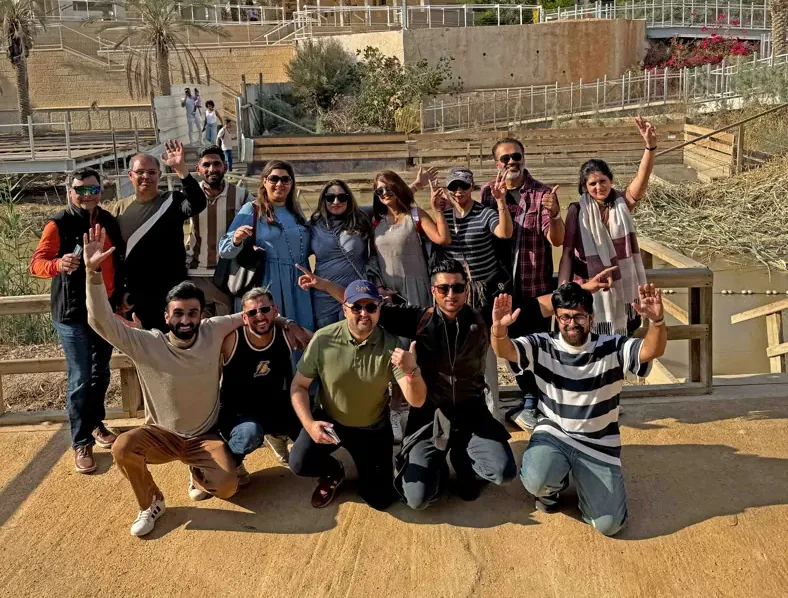
See the baptism site on our Jordan group tour
We bring travellers from Pakistan to exactly these places — Bethany Beyond the Jordan, the Dead Sea, Mount Nebo, Petra, Wadi Rum and Amman — with the visas, logistics and guiding handled. Join a set-departure group or ask us for a private, customised Jordan trip.
View the Jordan group tourQuestions
Bethany Beyond the Jordan: FAQs
Ready to make this trip a reality?
Our travel experts are ready to plan your perfect trip. WhatsApp us and we'll get back to you within the hour.
Chat on WhatsApp